
The high-performance hardness process for welding tables from DEMMELER®
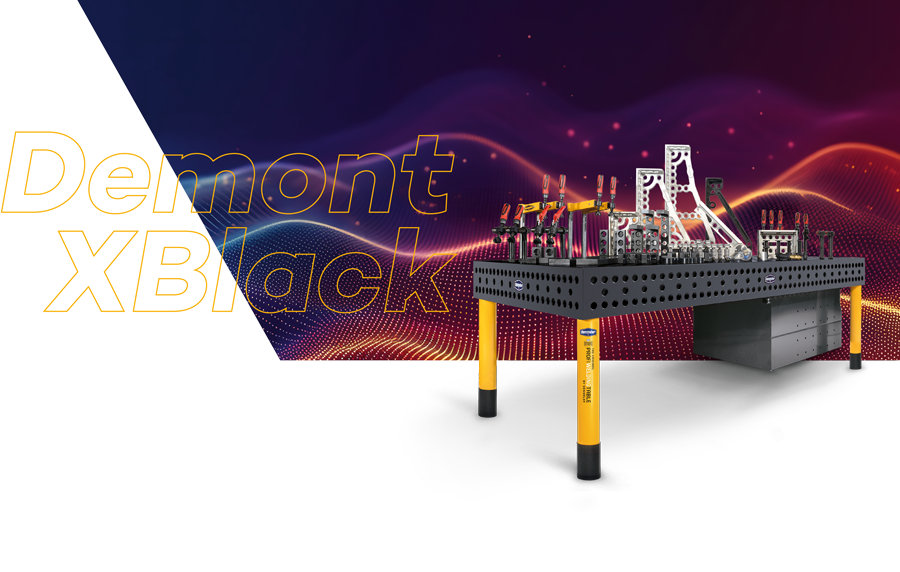
In the world of welding, the quality of the tools is crucial to success. DEMMELER has developed an innovative and sophisticated hardness process that takes the performance and durability of welding tables to a new level: hardness DemontXBlack 760 and DemontXBlack 890.

Selection of
the base material
The hardness process begins with the selection of a special base material – a high-alloy tool steel known for its exceptional basic hardness. This steel forms the basis for the outstanding properties of the welding tables and ensures high strength and stability.

Plasma nitriding
In the next step, the base material undergoes a state-of-the-art plasma nitriding process. This technology makes it possible to significantly increase the surface hardness by diffusing nitrogen into the surface of the steel. The result is an extremely hard and wear-resistant layer that protects the welding table from mechanical stress.

Post-oxidation
To further improve corrosion resistance, post-oxidation is carried out. This step creates a black oxide layer that is not only aesthetically pleasing but also provides an excellent barrier against environmental influences. This combination of plasma nitriding and post-oxidation ensures that DEMMELER welding tables are not only robust but also durable.
Hardness DemontXBlack
Original DEMMELER® 3D welding tables with the best properties:
The two surface hardnesses from DEMMELER®
With the hardness DemontXBlack 760 and DemontXBlack 890, DEMMELER is setting new standards in welding technology. The sophisticated process of plasma nitriding combined with post-oxidation ensures exceptional surface hardness and corrosion resistance. Trust in the quality and innovation of DEMMELER to take your welding projects to the next level.
Hardness DemontXBlack 890
For the most demanding applications, the hardness DemontXBlack 890 is the ultimate solution. With even greater hardness and superior corrosion resistance, this welding table is designed for extreme conditions and offers unrivalled performance.
Hardness DemontXBlack 760
This variant offers an excellent balance between hardness and flexibility. Ideal for everyday use in the welding workshop, the hardness DemontXBlack 760 offers high resistance to abrasion and mechanical stress.
Advantages of plasma nitriding with post-oxidation
on DEMMELER® 3D welding tables
Minimal delay
Plasma nitriding causes minimal distortion thanks to low treatment temperatures. The process induces compressive stresses, which improves fatigue strength and reduces fatigue properties. Tests and measurements are naturally carried out in air-conditioned measuring rooms.
Higher protection
against wear
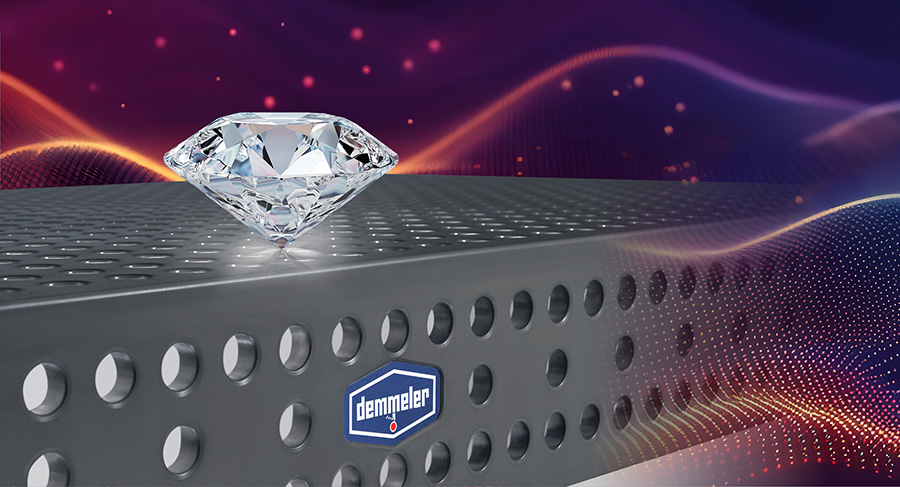
The hardened surface extends the service life of the welding tables and makes them particularly resistant to scratches, nicks and wear. Even with intensive use, the flatness is maintained.
Reduced adhesion
of welding spatter
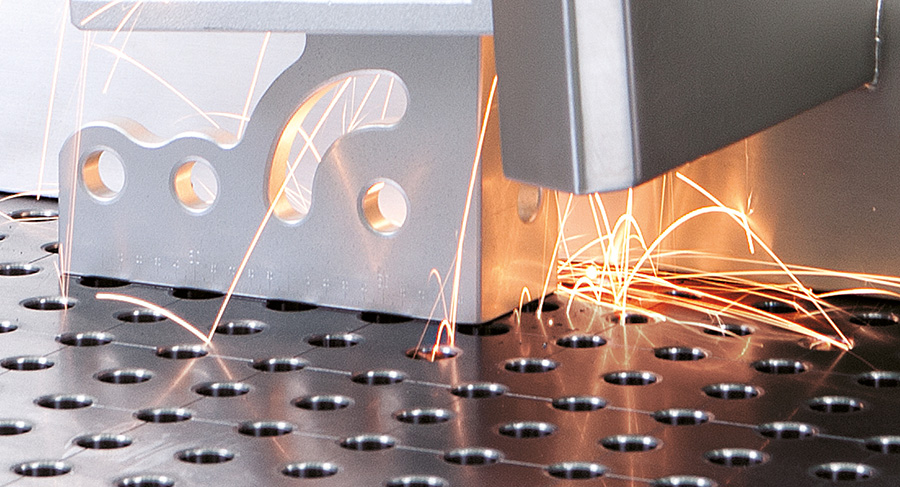
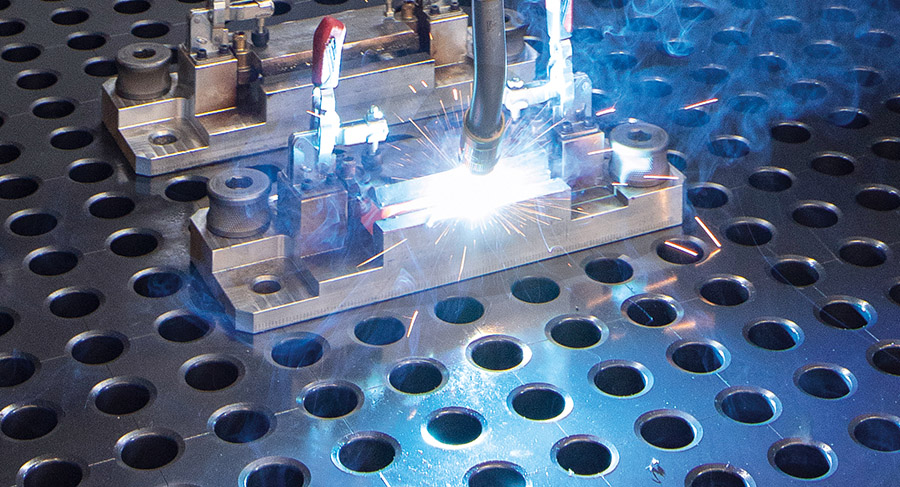
Plasma nitriding reduces the adhesion of weld beads to the welding table surface. This makes maintenance easier.
Corrosion resistance
and robustness
Oxidation immediately following plasma nitriding creates an additional corrosion protection layer. This results in a dark grey to black surface appearance.
Material comparison
| DemontXBlack 890 | DemontXBlack 760 | SOLID | ||
| Base hardness | for high impact resistance |   |
|
|
| Surface hardness | resistant to weld spatter | |
|
|
| Conductivity | for best welding results when using the ground connection |
|
|
|
| Load | high load capacities | |
|
|
| Evenness | for outstanding tool quality | |
|
|
| Protection against welding spatter | low adhesion | |
|
|
| Corrosion resistance | enhanced rust protection | |
|
|
| Lifetime | long-lasting protective effect | |
|
|
Assemble your ideal welding table
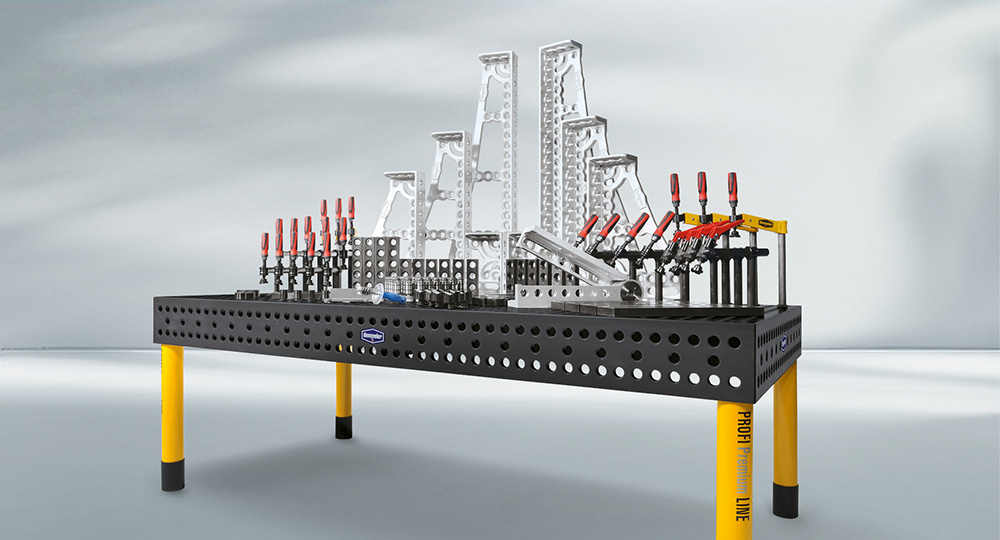
The original 3D welding tables from the inventor are characterised by high precision, extremely robust construction, modular handling and high-quality materials.
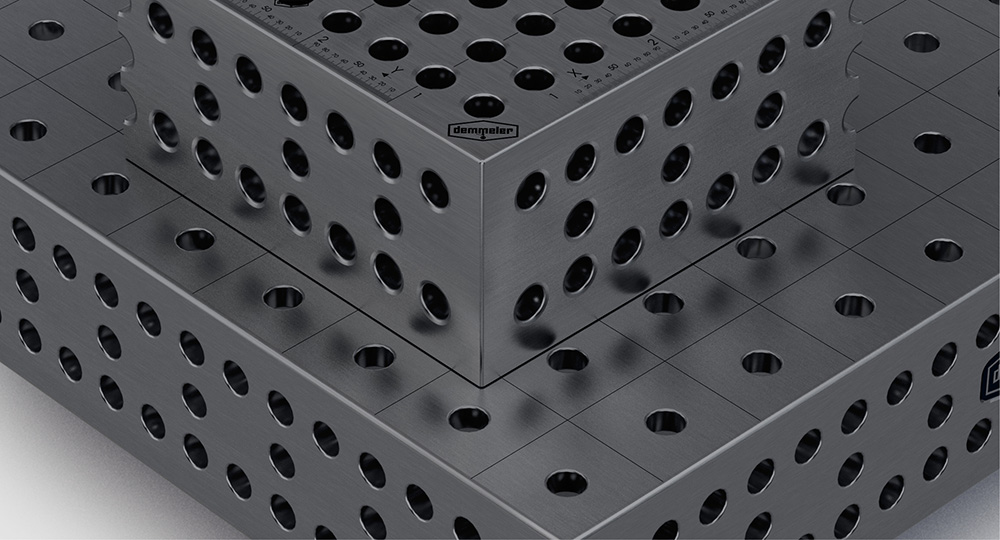
Our welding tables are available in system sizes D28, D22 and D16 - perfect for large, medium-heavy or delicate applications and welded constructions.
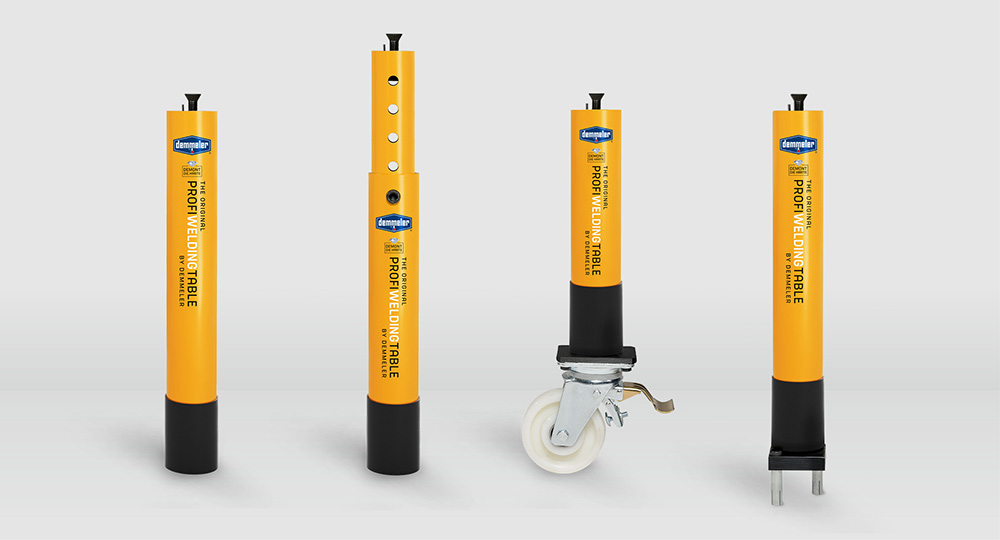
Whether with a standard leg, height-adjustable, mobile and wheeled, or firmly anchored to the floor – configure our welding tables individually according to your needs!